


In use by leading medium-sized businesses

Customer logo
Customer logo
Customer logo
Customer logo
Customer logo

For medium-sized suppliers

Answer ESG questionnaires without starting from scratch every time.

Whether it is a supplier self-assessment, SAQ, or CSR questionnaire — the information your customer is asking for lies in consumption data that already costs you money. strait makes both visible and the answer reusable.

Over €3,500/year in savings potential already identified

Hosting in the EU · GDPR-compliant · Your data does not train AI models

Categorize questionnaire in the 15-minute check

Tell us which sustainability questionnaire you have — in a 15-minute call, we will clarify what can already be answered with it.

In use by leading medium-sized businesses

Customer logo
Customer logo
Customer logo
Customer logo
Customer logo

For medium-sized suppliers

Answer ESG questionnaires without starting from scratch every time.

Whether it is a supplier self-assessment, SAQ, or CSR questionnaire — the information your customer is asking for lies in consumption data that already costs you money. strait makes both visible and the answer reusable.

Over €3,500/year in savings potential already identified

Hosting in the EU · GDPR-compliant · Your data does not train AI models

Categorize questionnaire in the 15-minute check

Tell us which sustainability questionnaire you have — in a 15-minute call, we will clarify what can already be answered with it.

Starting situation

The ESG questionnaire is coming. The deadline has already been set.

Data on energy, waste, water, and organization is compiled from scratch for every inquiry — and is already outdated by the time the next customer arrives.

Every time from scratch

The same information is researched and rephrased anew for each customer.

Payments without receipt

What was once appreciated can neither be repeated nor explained the following year.

No benefit in operation

The effort goes into a document and not into a single improvement.

"We started with electricity, water, air quality, and temperature, and saw consumption patterns we'd never had on our radar before. Then we added the level sensor in the silo. In the past, an employee had to climb up regularly, and all the machines stood still while they did. Today we can see the level live in the dashboard. That alone saves us over €3,500 a year. At the same time, all our ESG data comes together automatically. We're now well prepared for new ESG requirements."

Eirik Decker, CEO I Holzmanufaktur Decker

How it works

Get started in 3 steps

Step 1

Intro call

In a short call, we take a look at your business and clarify where the biggest lever is and whether strait is the right fit for you.

Step 2

Setup

We install the sensors, set up your site, and train your team, so everything runs with no effort on your part.

Step 3

Get started

You use strait day to day: compare sites, implement measures, and pull records at the push of a button.

Range of functions

Build once, reuse for every questionnaire

strait Automation: Live consumption from sensors with detected anomaly

Consolidate the information in one place

Energy, waste, water, and fleet from existing sources

Meters and sensors deliver continuously rather than once

Existing certificates and files are included

strait Location Intelligence: Energy costs per location with the greatest leverage

See what the data really says

Consumption by location, period, and area

Anomalies that would require explanation in the ESG questionnaire

Open items are named instead of estimated
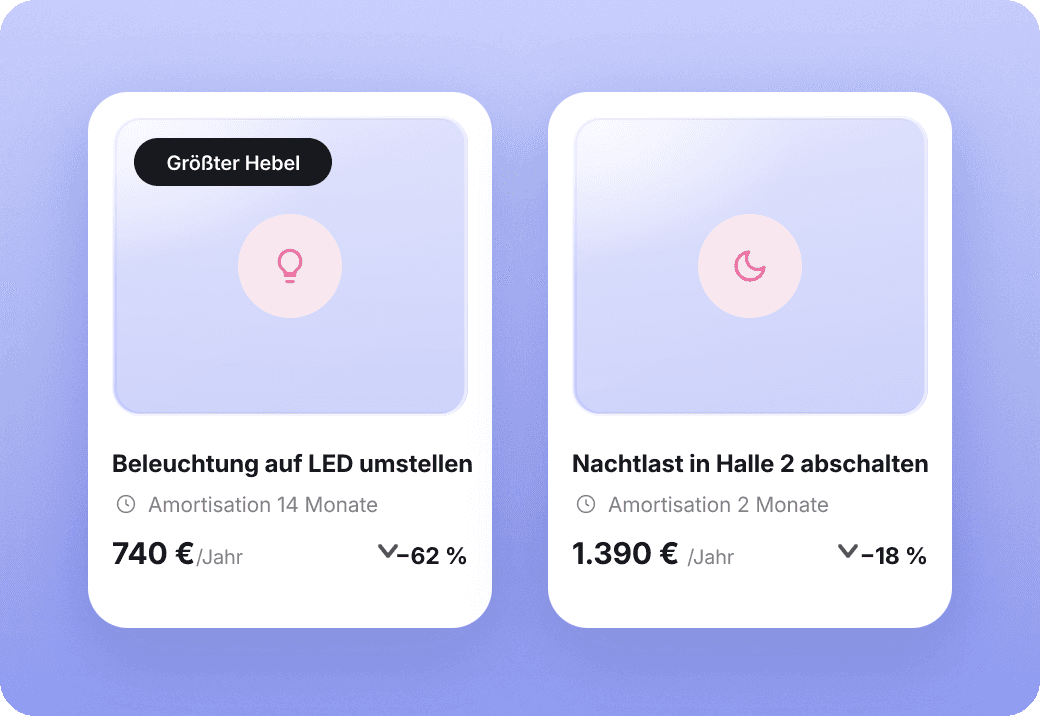
Strait measures and ROI: prioritized measures with payback

Duty becomes a lever

Measures according to expected savings and payback period

Reduce exactly the consumption that is being asked for

Progress remains documented between two requests

strait proofs: greenhouse gas balance, VS report and customer responses

Repeatable answers

Every piece of information remains traceable back to its source

The same basis supports the next customer's request

Greenhouse gas balance and reports are created from the same figures

Process

From questionnaire to answer in three steps

Classify request and existing evidence

Together, we will look at what the questionnaire requires and which information and supporting documents you already have.

Structure and bundle data and open points

Energy, waste, and organizational data come together in one place. What is missing is named instead of estimated.

Understandably reuse answers

Once verified, the information is ready for the next request — including the source and date of the data.

Cover

What an ESG questionnaire typically asks for

Energy and Emissions

Electricity, heat, fuels, and the resulting CO₂ emissions.

Waste, water and material

Quantities, fractions, and disposal pathways from the existing records.

Organization and Responsibility

Who is responsible, which guidelines apply, and how progress is documented.

Frequently Asked Questions

What suppliers want to know in advance

What is an ESG questionnaire?

A questionnaire used by a buyer to request environmental, social, and corporate governance information from its suppliers — referred to as a supplier self-assessment, SAQ, or CSR questionnaire, depending on the sender. The responses are incorporated into their supply chain evaluation.

What is asked in an ESG or CSR questionnaire?

Energy consumption and emissions, waste, water, and materials, as well as information on responsibilities, guidelines, and progress. The customization varies depending on the customer, but the underlying figures are largely the same.

How long does it take to fill out a sustainability questionnaire?

The first time, searching for the data is the largest task, not filling it in. Once the information is structured, the effort shifts significantly — and with the next request, it shifts even further because the foundation is already in place.

What to do if a required number is missing?

Marking them as open instead of guessing them. A named gap with an indication of when it will be closed is more resilient in the self-disclosure than a value that nobody can explain upon inquiry.

Do we have to do this all over again for every customer?

The question changes, but the database remains the same. Once consumption data and verifications are structured, the next inquiry is largely a matter of allocation rather than a new search.

What is an ESG questionnaire?

A questionnaire used by a buyer to request environmental, social, and corporate governance information from its suppliers — referred to as a supplier self-assessment, SAQ, or CSR questionnaire, depending on the sender. The responses are incorporated into their supply chain evaluation.

What is asked in an ESG or CSR questionnaire?

Energy consumption and emissions, waste, water, and materials, as well as information on responsibilities, guidelines, and progress. The customization varies depending on the customer, but the underlying figures are largely the same.

How long does it take to fill out a sustainability questionnaire?

The first time, searching for the data is the largest task, not filling it in. Once the information is structured, the effort shifts significantly — and with the next request, it shifts even further because the foundation is already in place.

What to do if a required number is missing?

Marking them as open instead of guessing them. A named gap with an indication of when it will be closed is more resilient in the self-disclosure than a value that nobody can explain upon inquiry.

Do we have to do this all over again for every customer?

The question changes, but the database remains the same. Once consumption data and verifications are structured, the next inquiry is largely a matter of allocation rather than a new search.

Which questionnaire is on your desk right now?

Show us the request and your existing numbers. We will tell you what can already be answered with them today.